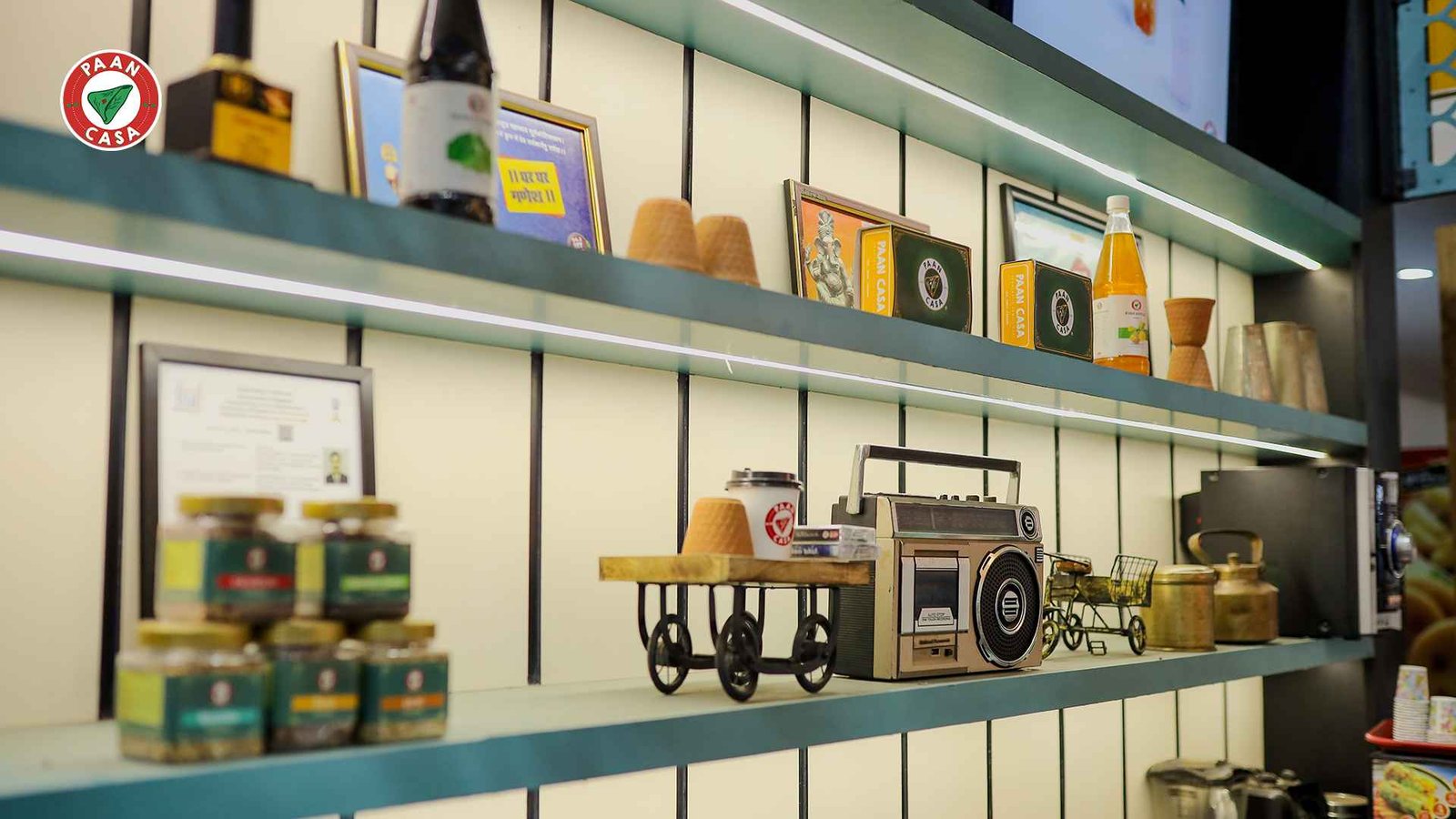
A paan café does not need to choose between tradition and contemporary design. In fact, the right interior can make traditional flavours feel more relevant while giving customers a reason to stay, interact, and return. The rise of the modern paan café reflects this shift, where architecture, lighting, colours and cultural details become part of the overall food experience.
A successful café interior should communicate something before the first product is served. For a paan café, that story can come from traditional motifs, regional artwork, natural materials or subtle references to Indian craftsmanship rather than simply covering every wall with decorative elements.
Research supports the commercial value of this approach. A study involving 381 restaurant customers found that social, design and ambient atmospheric factors positively influenced revisit intentions. Another study of 400 diners found that food atmospherics and ambience influenced customers’ emotional responses, which subsequently affected their intention to return.
This makes cultural heritage more than a decorative theme. When thoughtfully incorporated, it can influence how customers perceive the entire experience.
The strongest modern paan cafe concepts do not attempt to recreate an old-fashioned paan stall. Instead, they reinterpret familiar elements through contemporary design.
A thoughtful interior might use:
For a famous paan cafe in Banswara, incorporating local influences can make the space feel connected to its surroundings instead of looking like a generic café copied from a metropolitan market.
A visually appealing café can attract customers, but cleanliness helps build confidence. A clean paan cafe should make hygiene visible through organised counters, well-maintained surfaces and disciplined product handling.
This matters because customers often judge food-service quality through environmental cues. Research on restaurant servicescapes has found that atmosphere and service perceptions can influence revisit intentions.
For a famous paan cafe in Banswara, a clean, organised environment can therefore complement the cultural identity rather than compete with it. The goal is to make traditional food feel both authentic and comfortable in a contemporary setting.
Interior investment is becoming increasingly relevant as India’s organised food-service sector grows. Statista reports that the organised segment represented 47% of India’s food-service market in 2024, while QSRs accounted for 32.6% of food-service establishments in 2025. Statista also identifies urbanisation, rising disposable incomes and increasing store penetration in tier-2 and tier-3 cities as important growth drivers.
This creates an opportunity for a modern paan cafe to compete through identity and experience rather than price alone.
The modern customer may photograph the interior, meet friends, bring family members or simply spend more time at the outlet than originally planned. Interior design should therefore support different behaviours without losing the central theme.
For a famous paan cafe in Banswara, this could mean creating comfortable seating, clear movement around the counter and visually distinctive details that make the space recognisable.
A clean paan cafe can further strengthen the experience by ensuring that design and hygiene work together. An attractive space loses its impact if counters are cluttered or surfaces are poorly maintained.
The purpose of incorporating cultural heritage is not to turn a café into a museum. It is to give customers a contemporary way to connect with familiar traditions.
This is particularly important for India’s Indian food heritage, where recipes, ingredients, craftsmanship and regional stories have evolved over generations. A well-designed café can communicate those stories through colours, materials, artwork and even menu presentation.
For entrepreneurs looking to own a franchise, this balance becomes even more important. A recognisable design language can help establish a consistent brand identity across locations while allowing individual outlets to incorporate subtle local influences.
The future of the modern paan cafe is not only about what is served. It is also about how customers feel when they enter the space. Thoughtful interiors can preserve cultural heritage while making traditional paan feel relevant to contemporary audiences.
A famous paan cafe in Banswara can use this approach to create a distinctive identity, while a clean paan cafe can reinforce trust through an environment that reflects the quality of its products.
Paan Casa brings tradition and contemporary hospitality together, creating spaces where India’s cultural heritage can be experienced through modern design, familiar flavours and thoughtful customer service.
Want to bring the Paan Casa experience to your location? Contact us today to explore the opportunity.